
How Does Someone Become Your Client?
The Five Stages of Building Customer Relationships Online
If you're a coach, consultant, advisor, educator, or other experienced professional, one of the fundamental challenges of your business is:
How does someone who has never heard of you eventually become a client?
A common approach is to publish content, build a website, and invite visitors to Schedule a Free Call.
There's nothing wrong with offering a call. The problem is that you may be asking for too much, too soon.
Someone who has just discovered you may not be ready to spend 30 or 60 minutes talking with you. And they're probably not ready to consider investing thousands of dollars in coaching, consulting, or professional services.
It's a little like asking someone out on a date shortly after you've met.
You haven't developed enough of a relationship yet.
Instead, you can design a series of progressively deeper experiences that allow people to get to know you, experience the value of your expertise, and decide whether they want to continue the relationship.
I think about this as a five-stage customer journey.
1. Attract an Audience
The relationship starts with awareness.
People might discover you through social media, networking, referrals, speaking, podcasts, your website, or other free content.
At this point, they may know something about you, but you probably don't know anything about them.
That's okay.
Your objective isn't necessarily to make a sale. It's to become visible and demonstrate that you understand something they care about.
For experienced professionals, publishing useful content also allows you to demonstrate your expertise rather than simply claiming that you have it.
2. Identify Interested Leads
Some members of your audience will want to learn more.
Give them an easy, low-risk way to raise their hand.
You might offer a useful guide, video training, mini-course, webinar, newsletter, live event, or access to a free community in exchange for their contact information.
I don't really think of this as giving something away for "free." There is an exchange taking place.
You provide something valuable. They give you permission to continue the conversation.
Before, they were an anonymous member of your audience. Now they're a lead who has expressed interest in what you have to offer.
3. Nurture the Relationship
Now you have an opportunity to continue helping them.
You might send useful emails, publish a regular newsletter, invite them to a live presentation or workshop, or welcome them into an online community.
Each experience gives someone another opportunity to get to know you and your expertise.
Reading an article is different from attending a live presentation. Attending a presentation is different from participating in a community. Participating in a community is different from working with you personally.
The objective isn't to pressure someone into buying.
It's to create progressively deeper experiences that build the relationship over time.
4. Offer Progressive Ways to Work With You
Eventually, it becomes appropriate to invite people to buy something.
But you don't necessarily need to jump immediately from free content to your most expensive service.
You can create a progression of offers with increasing commitments of time and money:
Free → Low-priced → Medium-priced → Higher-priced
A book, workshop, short course, or other entry-level offer gives someone an opportunity to experience what it's like to learn from you or work with you without making a major commitment.
From there, they might participate in a more substantial course, group program, subscription, or service.
After developing that relationship, a private conversation about a higher-value coaching, consulting, or advisory engagement becomes much more natural.
The sales conversation hasn't disappeared.
It simply occurs at a more appropriate point in the relationship.
5. Deliver the Value You Promised
Once someone becomes a client, the relationship doesn't end.
Now you need to deliver the transformation or result they purchased through your workshops, courses, coaching, consulting, communities, or other products and services.
When clients receive meaningful value, some will continue working with you, purchase additional services, and ultimately become advocates who introduce you to other people.
And the customer journey continues.
Your Online Business Should Support the Relationship
When you look at all five stages together, an online business starts to look very different from a traditional professional website.
A website that describes who you are, lists your services, and says Schedule a Free Call is essentially an online brochure.
A true online business can support the entire relationship:
Attract → Lead Generation → Nurture → Offer → Deliver
That doesn't mean you have to build everything at once.
But before you start building websites, funnels, email sequences, courses, communities, and other online assets, it helps to understand the relationship they're supposed to support.
Take a look at your own business from the perspective of someone who has never heard of you.
Suppose they discover you today.
What happens next?
Is their only option to schedule a call?
Or have you created a series of useful experiences that allow them to progressively get to know you, learn from you, and decide when they're ready to take another step?
Your customer journey doesn't need to pressure people into becoming clients.
It should make it easier for the right people to develop a relationship with you so that, when they're ready, becoming a client is the natural next step.
Continue Your Journey
If you'd like to explore these ideas more deeply, I invite you to join the Expert Online Business Launchpad, my complimentary foundational training for experienced professionals building online businesses. The link is on this page.
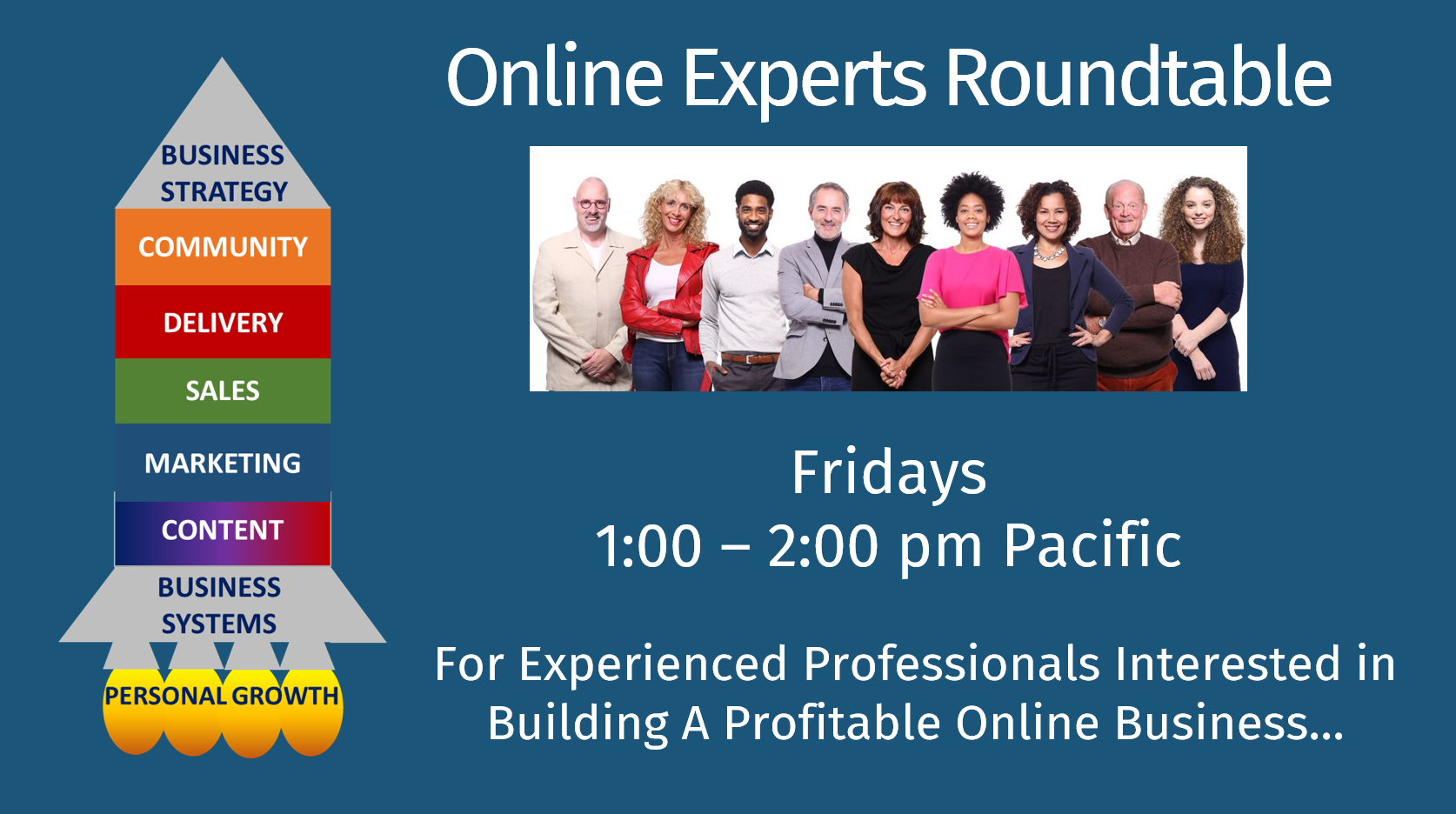
You'll learn more about designing your customer journey, the essential elements of an online business, and the systems you need to support the relationships you're building.