
Your Online Business Is More Than a Website
What You Need to Attract, Engage, and Serve Clients Online
When experienced professionals decide to build an online business, one of the first things they usually think is:
“I need a website.”
That was certainly my first thought.
When I began making the transition from my corporate career into building my own business, the common advice was to start with WordPress. So I did what many coaches, consultants, authors, speakers, and other professionals do. I started building a website.
And yes, you probably do need a website.
But a website by itself isn't an online business.
The Traditional Professional Website
Look at a typical professional website and you'll probably find a familiar collection of pages: Home, About, Services, Blog, and Contact.
The website tells visitors who you are, what you do, and why you're qualified. Then it usually invites them to contact you or schedule a free call.
The problem is that it functions primarily as an online information brochure about you. It's not about your ideal client and what they are interested in and what they want to do.
Another problem is that often it's a passive experience rather than an interactive and engaging conversation.
While visitors can typically schedule a 30- or 60-minute conversation with you, that's a fairly big leap for someone who just discovered you.
There needs to be an easier way to begin the relationship.
Your Online Business Should Create an Interactive Experience
A successful online business doesn't simply provide information. It gives people opportunities to engage with you over time.
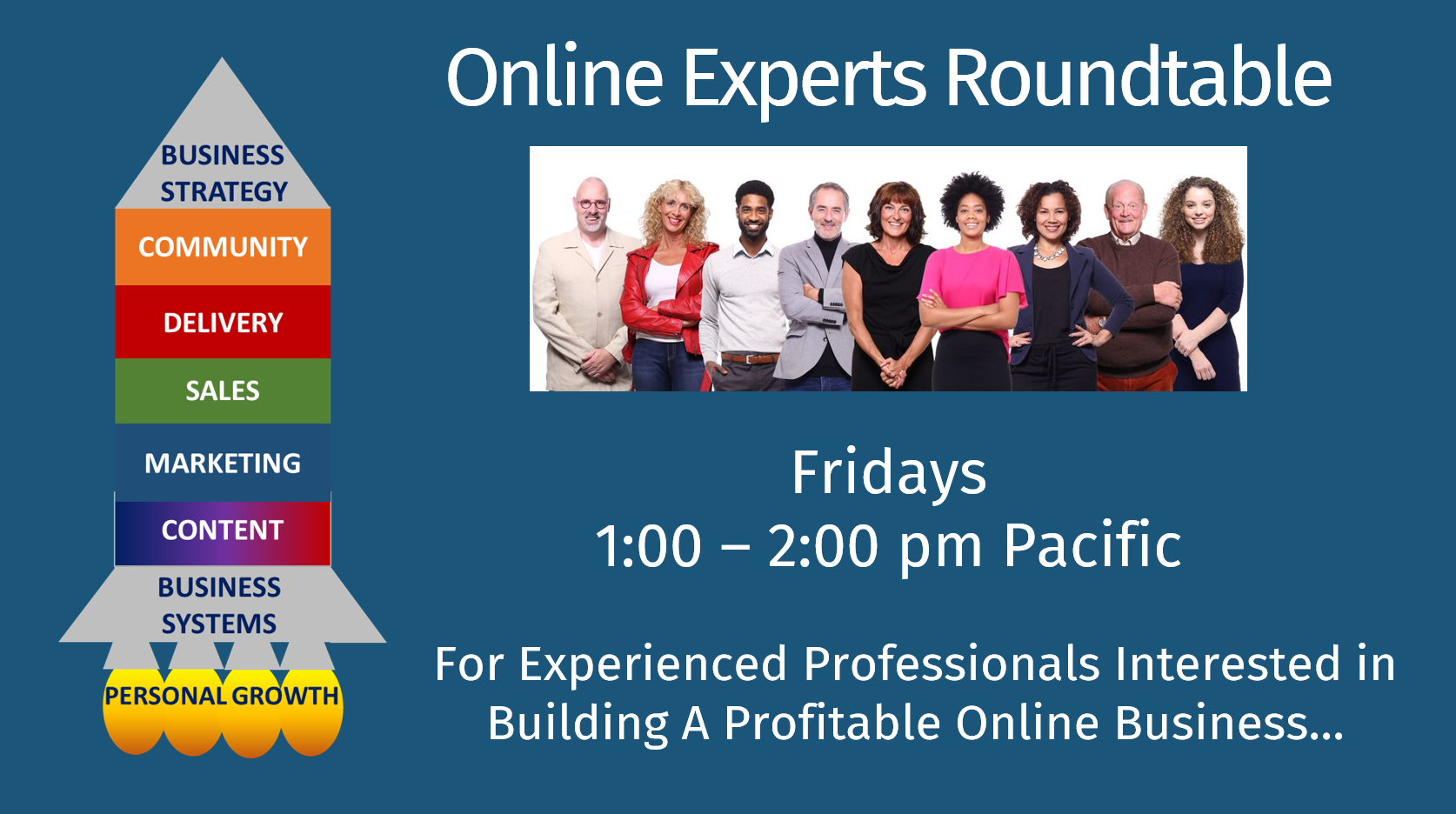
For an expertise-based business, there are five essential activities to engage your audience and build relationships over time.
Content allows you to share your knowledge and expertise through articles, videos, podcasts, presentations, and social media.
Marketing gives interested people opportunities to raise their hands and say, “I'd like to learn more” and it gives you the opportunity to nurture a relationship over time.
Sales allows you to occasionally offer appropriate solutions as those relationships develop and specific client desires emerge where your products and services can be useful to them.
Delivery provides the systems for delivering coaching, consulting, training, courses, workshops, subscriptions, and other services.
Community creates spaces where prospects and clients can interact with you and with one another.
How do you go about designing and supporting that interactive experience?
Think in Terms of a Customer Journey
The traditional professional website often creates a very short customer journey:
Find me → Visit my website → Schedule a call.
A more complete online business creates a progression of experiences.
Someone might first discover you through social media, a podcast, presentation, referral, or article. They visit your website and find something valuable, perhaps a guide, video, assessment, or workshop.
They provide their email address to receive it. Now you have permission to continue the relationship through email.
You can provide additional useful information through email, invite them into a free community or live event, and eventually offer an entry-level product or service.
As you develop the relationship, clients may advance beyond your entry level offers to your higher end offers.
That's a deliberately designed customer journey that builds relationships.
The Technology Can Get Complicated
Creating that experience requires more technology than a typical website delivers.
You will need webpages, forms, a contact database, email automation, video hosting, sales pages, payment processing, private content, and community capabilities.
It's easy to fall into what I call the multiple tools trap.
You start with a website platform. Then you add an email system, landing-page builder, scheduling tool, course platform, and community platform.
Before long, you're trying to make six or seven different tools work together.
That's why I recommend using an integrated online business platform wherever practical. You may still need specialized tools, but reducing the number of separate systems makes your business much easier to build and operate.
Don't Try to Build Everything at Once
Even with an integrated platform, you don't need to build your entire customer journey all at once.
During my corporate career developing software systems, we never tried to build a large, complex system in one giant project. We designed the overall system and then built the system incrementally in smaller subsets, or sprints.
Your online business can be developed the same way.
Start by designing the overall customer journey. Then determine what the first working version of your business needs to do - a Version 1.0 of your business.
It needs enough capability for you to offer something valuable, serve clients, and generate revenue.
Then you operate it, learn from it, improve it, and add capabilities as you build future versions. You don't have to have a website to begin with. You can add it later after you start generating revenue.
Design the Business Before You Build the Technology
Unfortunately, there is a prevailing myth about building an online business that you should just build something and try it. If it doesn't work, try something else.
Here is the principle based on building software systems that I wish I had remembered when I started:
Design your online business before you build it. Then build it and operate it in focused sprints.
Don't start by asking which website builder, email system, funnel software, or course platform you should buy.
Start by asking:
Who do you want to serve? How will you attract them? What is an easy first step for them to engage with you? How will you nurture the relationship? What solutions will you offer? How will you deliver the value you've promised?
Once you understand that journey, you can determine which online capabilities you actually need to support it.