
Streamline Your Systems: Simplify Your Online Business
Avoiding Technology Overwhelm
If you're building an online business, it's easy to feel overwhelmed by using online technology.
There are separate tools for websites, blogs, email marketing, landing pages, funnels, webinars, online courses, communities, payment processing, appointment scheduling, CRM systems, text messaging, video hosting, and more.
In the beginning, you didn't set out to build a complicated business. It happened one tool at a time, each one solving a problem in the moment.
You added a website.
Then an appointment calendar.
Then an email system.
Then a landing page builder.
Then course hosting.
Then payment processing.
Then a community platform.
Then a CRM.
Then another tool because the first CRM didn't quite do what you needed.
And each one made sense at the time—it solved a specific problem.
But each time, you spent hours, even days, researching and deciding which tool to use. Then you spent days or weeks learning how to use it. And even more time figuring out how to integrate everything so it worked together.
You didn't mean to do it, but you ended up with what I call a spaghetti system.
Everything technically works, but it's tangled, inefficient, and difficult to manage.
Before long, you're spending more time managing software than serving clients.
You can avoid this if you design your overall system first and then build it gradually over time in focused project sprints.
Design it First. Then Build in Sprints
Before becoming an online business coach, I spent more than 30 years working at organizations such as Exxon and NASA developing and managing engineering software systems.
One lesson I've learned is that technology should support the business process - not define it.
In other words, you first define how your business works. Then you select technology that supports that design.
So, what's the business process for an online expert business?
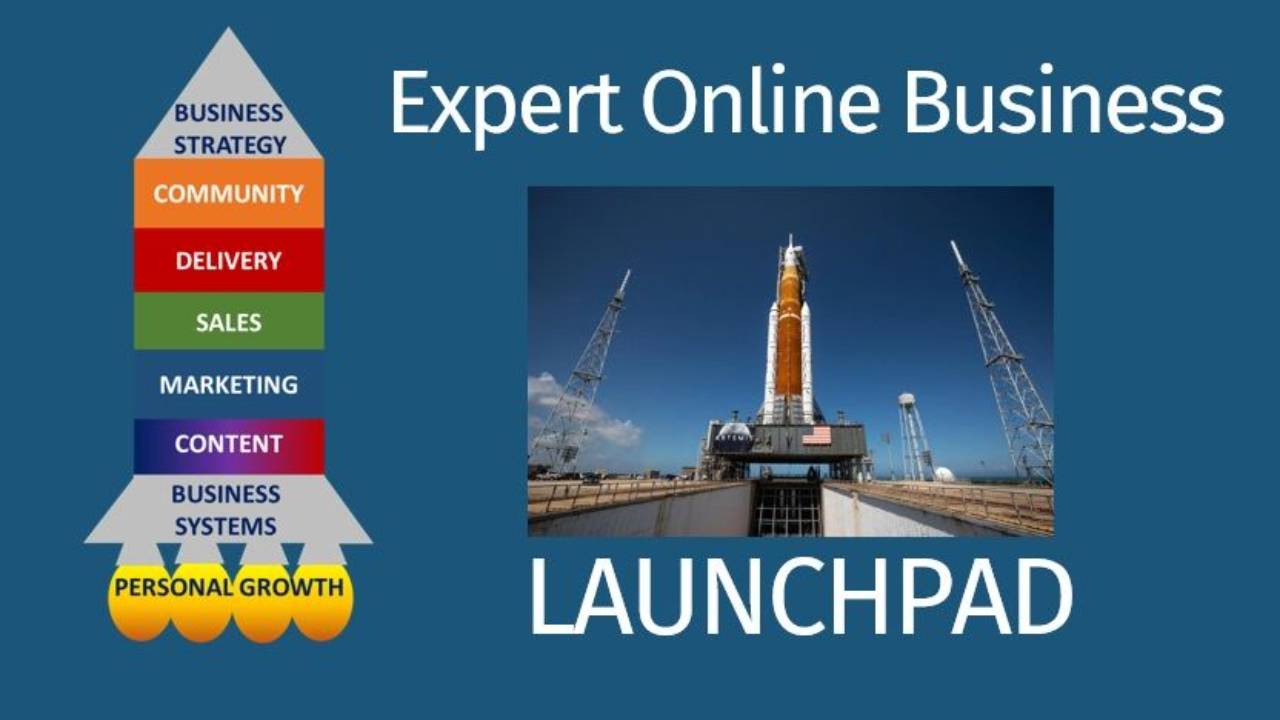
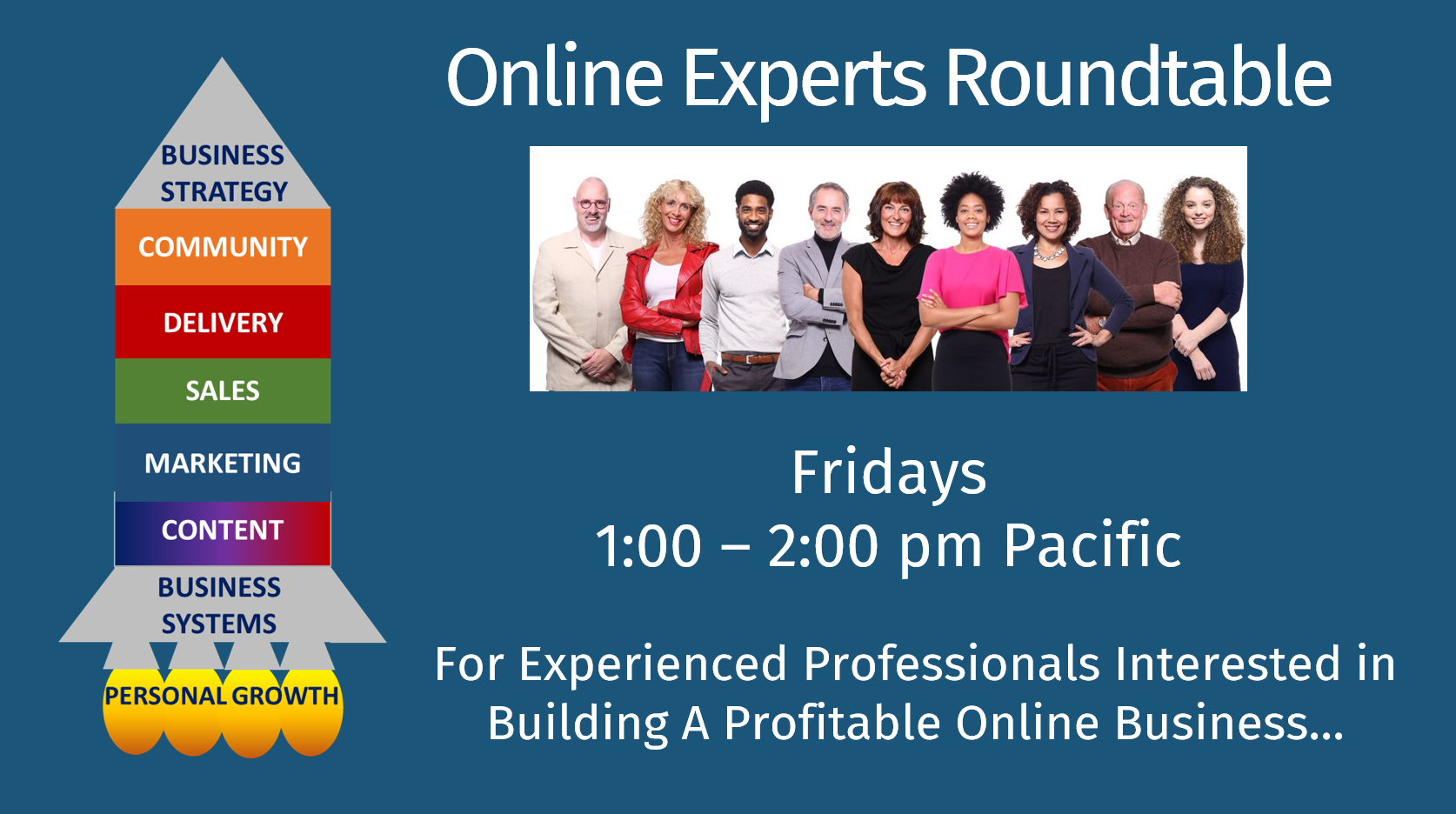
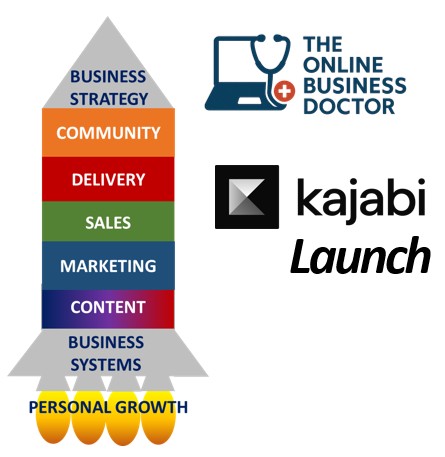
I use a Rocket Model consisting of eight success elements, as shown below.
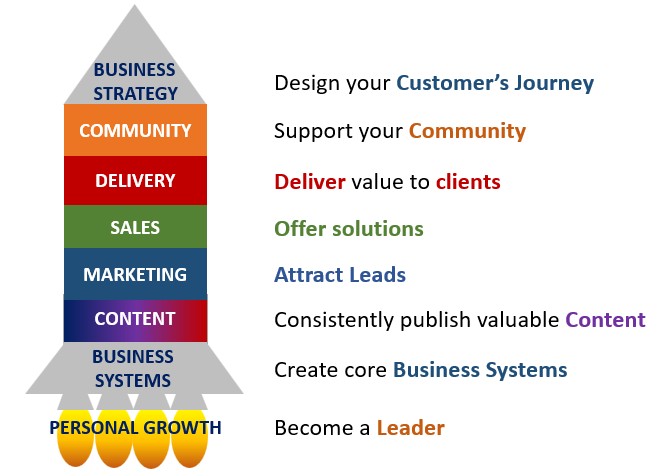
At the bottom support of the rocket are your business systems. Those systems support the core business activities that help your business grow:
- Publishing content
- Attracting leads
- Converting prospects into clients
- Delivering value
- Building community
The goal of your business systems is to help people move through a customer journey that creates value for them, develops trust, and provides sustainable growth for your business.
Develop Your Business Strategy with a Customer Journey
The command module of the rocket is your business strategy.
A key part of that strategy is your customer journey, which is a series of experiences that guide people from "never heard of you" to "interested" to "working with you" to becoming one of your best clients.
While every business is unique, most customer journeys follow five basic stages.
Once you understand these five stages, the technology becomes much easier to choose because every tool now has a specific job to perform within the customer journey.
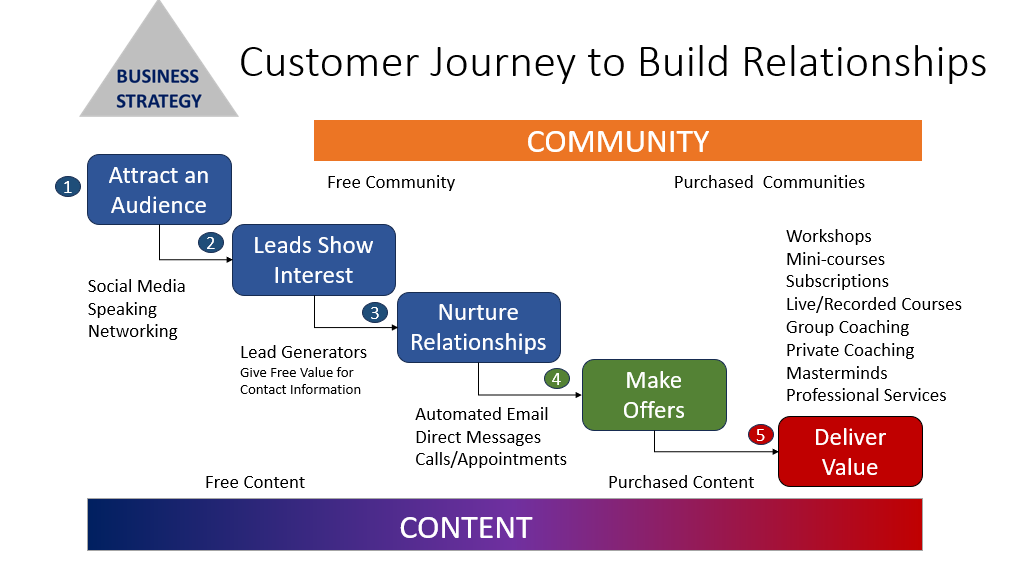
1. Attract an Audience
Everything starts with visibility.
People need to discover you before they can work with you.
This may happen through:
- Social media posts and videos
- Speaking engagements
- Networking
- Referrals
- Podcast interviews
- Blog and video content
The goal at this stage is to create awareness and position yourself as someone who can help your intended audience.
2. Generate Leads
Once people become aware of you, the next step is to invite them to raise their hand and express interest in something you can offer to help them solve a problem or move closer to their goals.
This is often done through a lead magnet.
Examples include:
- Guides
- Checklists
- Workshops
- Webinars
- Assessments
- Templates
- Free communities
Interested people—your leads—provide their contact information in exchange for something valuable so that you can continue the conversation.
3. Nurture Relationships
People need time to learn more about you, understand your approach, and develop trust before they will work with you.
You can continue the conversation through:
- Email newsletters
- Automated email sequences
- Direct messages
- Appointment calls
- Community participation
- Live events
The purpose of nurturing is to provide value, build trust, and occasionally invite people to take the next step of working with you.
4. Make Offers
From time to time, you invite people to take a next step and work with you through paid products or services.
These offers might include:
- Workshops
- Challenges
- Mini-courses
- Memberships or subscription programs
- Live or recorded online courses
- Private or group coaching programs
- Consulting services
- Masterminds
The important point is that offers become a natural next step in the customer journey rather than a disconnected sales pitch.
5. Deliver Value
Once someone becomes a client, your online systems must support the delivery of the products and services you've promised.
The delivery experience is where your clients receive the transformation you've promised.
This is where trust is reinforced, testimonials are created, and long-term client relationships are built.
Great marketing may attract attention, but great delivery creates advocates.
What Systems Do You Actually Need?
Once your customer journey is defined, the technology you need becomes much easier to understand.
You can begin mapping systems to specific business activities as shown below.
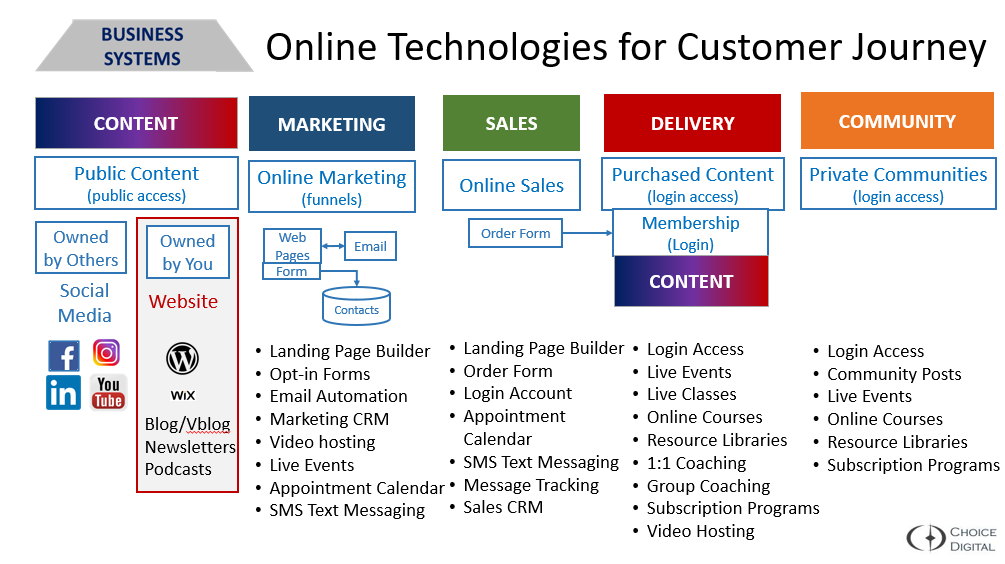
Content Systems
To publish content and create awareness, you typically need a mix of public content platforms owned by others and a platform owned by you:
- Social media profiles (owned by others)
- A website and blog (owned by you)
Marketing Systems
To generate and nurture leads using a lead magnet funnel, you will need:
- Landing pages
- Opt-in forms
- Email automations
- Marketing CRM
- Appointment calendar
- Commercial-free video hosting
Sales Systems
To convert leads into clients, you will need:
- Sales pages
- Order forms
- Payment processing
- Email automations
- Appointment calendar
- Sales CRM tools
Delivery Systems
To provide digital products and services, you will need:
- Login account management
- Live events and live classes
- Online course hosting
- Coaching delivery tools
- Resource libraries
- Email automations
Community Systems
To support both marketing and ongoing client engagement, you will need:
- Community platforms
- Discussion areas
- Live event management
- Member communication tools
- Access to online resources and resource libraries
Design the System. Build It in Sprints.
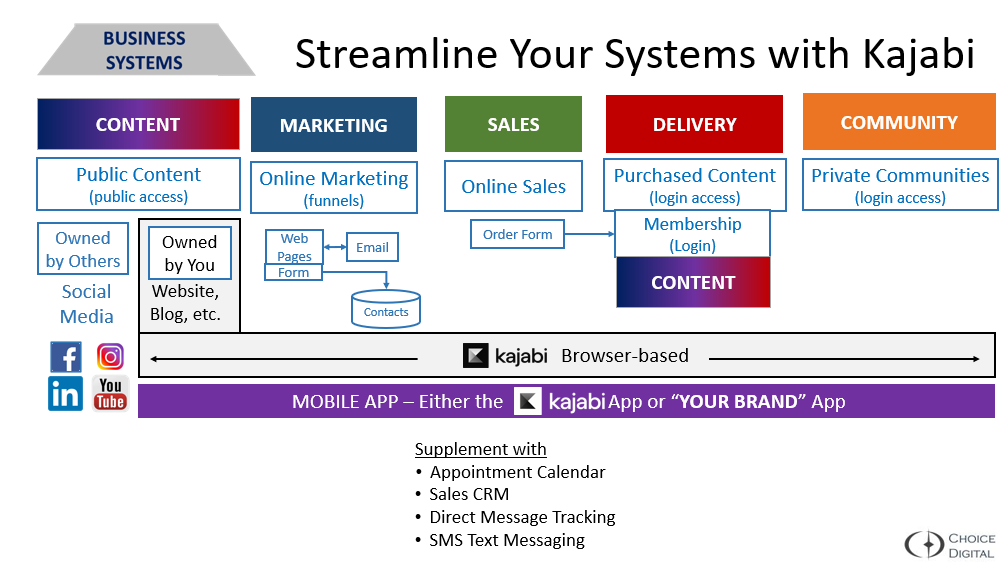
The first step is to minimize the number of tools you're using.
I recommend Kajabi because it allows you to consolidate many of the systems required to support a complete customer journey into a single platform.
Fewer tools mean fewer integrations, fewer points of failure, less time spent managing technology, and more time spent serving clients.
The second step is this:
Design your overall system first to support the initial version of your customer journey.
Then build it in small, focused project sprints.
I recommend starting with a Revenue Sprint.
Rather than spending months building a perfect website, complete course library, and complex funnel system, create a simple paid offer that can generate revenue quickly.
Your first sprint should ideally pay for your technology investment while generating qualified leads for your higher-value offers.
Once that sprint is working, you can build additional sprints that expand your customer journey over time.
You can then add websites, lead generators, live events, online courses, coaching programs, communities, and other capabilities one focused sprint at a time.
What if You Already Have Existing Tools?
As noted above, it's easy for experts to accumulate too many tools over time.
The complexity of managing multiple tools creates friction in your business.
And friction slows growth.
That's why I generally recommend making the investment to consolidate multiple tools into an integrated platform whenever possible.
Instead of stitching together numerous applications, you can simplify operations, reduce costs, and spend more time focusing on what matters most—helping your clients succeed.
Getting Help to Go Faster
Whether you're simplifying your system by tool consolidation, or you're ready to build your online systems to support a customer journey, you can get a free or discounted Kajabi trial license along with my help to implement your business faster with my 30-day Kajabi Launch program
The Real Goal
Technology should support your business—not become your business.
The real goal is creating a clear business strategy and customer journey that helps people move from where they are today to where they want to be tomorrow.
Start with strategy.
Design a customer journey.
Select systems that support that journey.
Then build one focused sprint at a time.
When you gain clarity, you reduce complexity.
And you create a business that is easier to build, easier to manage, easier to scale, and ultimately more rewarding to operate.